The Pacific War dominates this week — Wake Island, Iwo Jima, Midway's final carrier kill, and the Pick, McManus on the Doolittle Raid, which finally gives that operation the operational rigor it deserves. Meyer on Warring States China and Langbein's boy-soldier testimony round out an unusually strong slate.
🎯 This Week's Pick
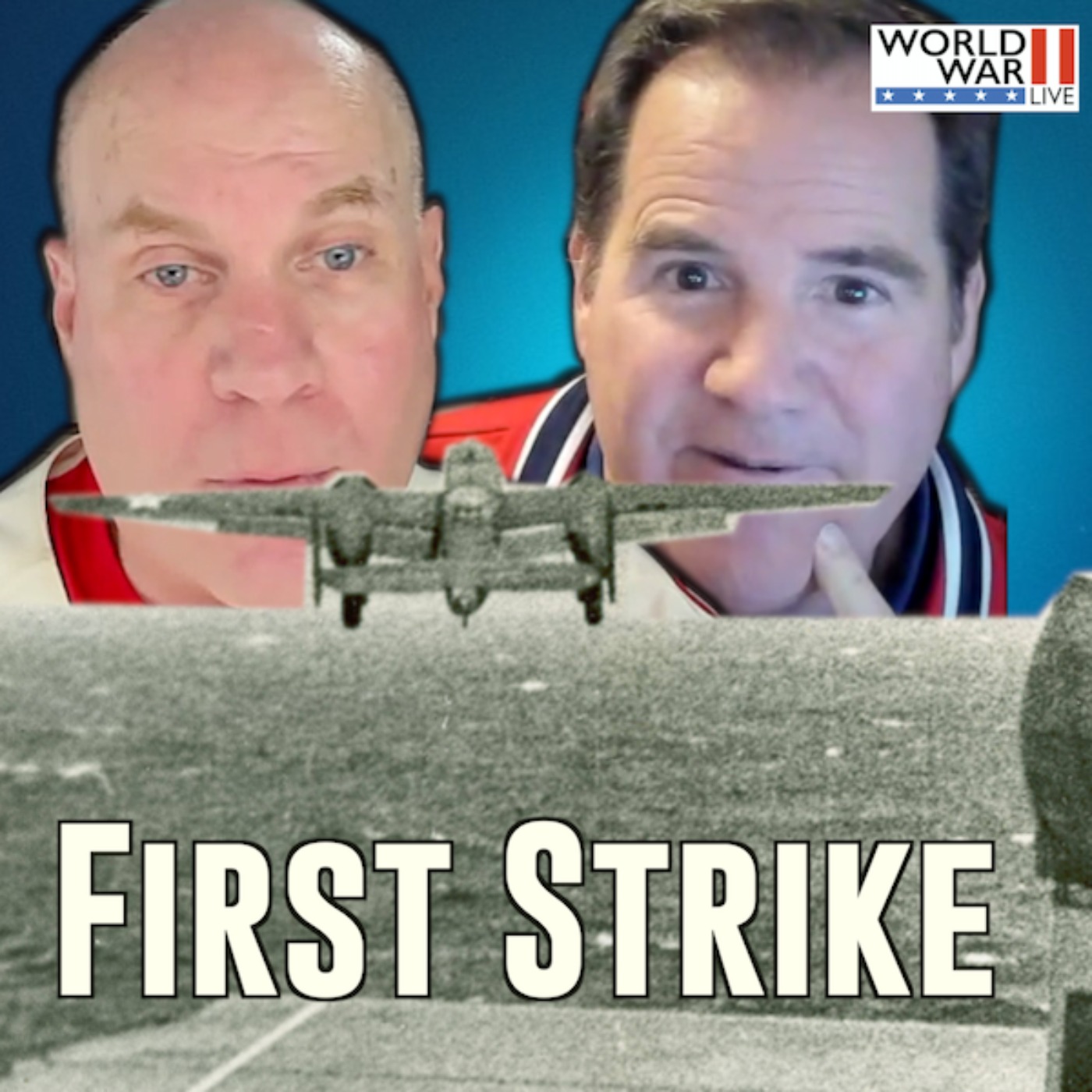
The Doolittle Raid: America Strikes Back
World War 2 LIVE · 1h07m · May 08
Dr John C. McManus — professor of US military history, Missouri S&T; Kevin Hymel — military historian
World War IIAir WarfareTactics & Battles
McManus and Hymel break down the full operational picture of the April 1942 Doolittle Raid — the carrier launch mechanics, Doolittle's leadership under absurd constraints, and why the strategic and psychological payoff far outweighed the negligible physical damage. McManus brings the kind of operational rigor this story rarely gets, elevating it beyond the feel-good vignette it's usually reduced to, and the hour-plus runtime lets them get into the Japanese defensive recalculation that followed. One of the best dedicated WWII feeds running, and this episode shows why.
🔴 Essential
Episode 412 - The Battle of Iwo Jima: Part 1
Lions Led By Donkeys · 1h26m · May 04
Peter Crean & Luke Robinson
World War IITactics & BattlesLeadership & Command
Lions Led By Donkeys opens their Iwo Jima series with the operational setup — Kuribayashi's defensive concept, the Marine Corps landing plan, and the command decisions that shaped one of the Pacific War's bloodiest engagements. At nearly 90 minutes, they have room to cover the Japanese tunnelling strategy, the amphibious approach, and the intelligence picture in real detail. The LLBD tone — irreverent but serious about the history — works well here because there's genuine command failure to dissect.
The Battle for Wake Island
Unauthorized History of the Pacific War · 3h25m · May 05
Seth Paridon — former chief historian, National WWII Museum; Bill Toti — retired US Navy submarine commodore
World War IITactics & BattlesNaval
A combined re-release of both Wake Island episodes clocking in at a mammoth three and a half hours. Paridon and Toti cover the Marine garrison's desperate defence, the initial Japanese repulse, and the agonising decision not to relieve the island — one of the early Pacific War's most bitter operational stories, and a sharp reminder of how quickly the theatre swallowed men and material in those first months. At this length you get the naval context, the command failures, and the ground combat in full. Worth the time if you're into early-war Pacific operations.
Episode 623-And The Hiryu Makes Four
The History of WWII Podcast · 21:01 · May 05
Ray Harris Jr. — independent WWII historian
World War IINavalTactics & Battles
The final carrier kill at Midway — Enterprise and Hornet locate and destroy Hiryu despite a chain of errors that nearly derailed the attack, closing the book on Japan's offensive carrier capability in one devastating afternoon. Harris walks through the strike sequencing, the mistakes in coordination, and the stroke of luck that made it work. At 21 minutes it's compact, but the tactical granularity is superb and it captures the chaos of carrier air operations better than most longer treatments.
Ancient China: The Warring States
The Ancients · 59:45 · May 07
Prof Andrew Seth Meyer — author of To Rule All Under Heaven
AncientTactics & BattlesStrategy & Grand Strategy
Prof Andrew Seth Meyer joins Tristan Hughes for a properly military treatment of the Warring States period — mass conscript armies, crossbow adoption, the evolution of siege warfare, and the ruthless campaigns that led to Qin unification. This is a period Western military history podcasts almost never cover, and Meyer clearly knows the military dimension, not just the philosophy. An hour well spent if you want to expand your frame of reference beyond the Mediterranean.
AW408 - Why Germania?
Ancient Warfare Podcast · 47:16 · May 08
Murray Dahm — editor, Ancient Warfare Magazine; panel contributors
AncientStrategy & Grand StrategyColonial & Imperial
The Ancient Warfare panel lays the groundwork for their upcoming Augustus issue by tracing Rome's strategic reasoning for pushing into Germania — from the Cimbri and Teutones shock through Caesar's Rhine crossings to Augustus's full commitment to the frontier. This is strategic-level ancient military history done properly: why Rome chose to fight where it fought, and how the threat perception evolved over a century. Good preparation even if you don't read the magazine.
🟡 Selections
305 - A Boy Soldier in Hitler's Army
The WW2 Podcast · 1h03m · May 06
Angus Wallace — independent military historian; Willi Langbein — former boy soldier, Wehrmacht
World War IIMemoir & Personal AccountHome Front & Society
Angus Wallace interviews Willi Langbein, conscripted at fourteen and fighting Soviet tanks on the Eastern Front by March 1945. This is a properly harrowing first-person account of the Wehrmacht's final collapse — child soldiers thrown into close-range anti-tank combat, the Hitler Youth pipeline, and survival amid disintegration. The hour-long format gives Langbein room to tell his story in full, and Wallace lets the testimony breathe without over-narrating.
📅 Published days before VE Day (May 8) — a German boy soldier's account of the war's final weeks is perfectly timed.
The Visionaries: One War Ends, Another Begins (Part 6)
We Have Ways of Making You Talk · 1h00m · May 06
James Holland & Al Murray
World War IIStrategy & Grand Strategy
Holland and Murray trace the Truman transition and the strategic origins of the Cold War — how US policy pivoted from defeating the Axis to containing the Soviets. Strong on grand strategy, though the military content is more geopolitical framing than operational detail.
📅 VE Day (May 8) — the end of the European war and the beginning of the Cold War order is the episode's exact subject.
The Visionaries: Planning For Peace (Part 5)
We Have Ways of Making You Talk · 1h10m · May 04
James Holland & Al Murray
World War IIStrategy & Grand StrategyLogistics & Supply
Bretton Woods, the dollar replacing sterling, and the American contribution to D-Day — Holland and Murray weave economics and military logistics into the story of how the US built the postwar order while still fighting. The D-Day material lifts this above pure economic history.
📚 Reading List
To Rule All Under Heaven — Andrew Seth Meyer
Professor Meyer's new book on the Warring States period — 261 years of fragmentation, mass armies, and the ruthless rise of Qin toward unification. If the podcast episode left you wanting the full picture of how chaos forged China's first empire, this is where to go.
Via: Ancient China: The Warring States, The Ancients
📖 AmazonTarget Tokyo: Jimmy Doolittle and the Raid That Avenged Pearl Harbor — James M. Scott
The definitive account of the Doolittle Raid, built on crew diaries, mission records, and Japanese sources. Goes well beyond the Hollywood version to show just how improvised and desperate the whole operation really was — a perfect companion to the WW2 Live episode.
Via: The Doolittle Raid: America Strikes Back, World War 2 LIVE
📖 AmazonShattered Sword: The Untold Story of the Battle of Midway — Jonathan Parshall and Anthony Tully
The History of WWII Podcast is deep into Midway, and this is the book that rewrote the battle from the Japanese side. Parshall and Tully dismantled decades of myth about Japanese decision-making — including the fate of the Hiryu — using Japanese primary sources.
Via: Episode 623 - And The Hiryu Makes Four, The History of WWII Podcast
📖 Amazon
If a friend would find this useful, send them the link. That’s the entire growth strategy.