🔴 Essential

The Road To Kiev: Trouble At The Top (Part 1)
We Have Ways of Making You Talk · 57:51 · Oct 14
James Holland & Al Murray
World War IIStrategy & Grand StrategyLeadership & Command
Holland and Murray open a four-part series on the August–September 1941 pivot that sent Guderian's panzers south toward Kiev instead of Moscow — one of the war's most consequential command decisions, and one that adds an Eastern Front axis to an already WWII-heavy week. Part 1 focuses on the leadership crisis: Stalin sacking Zhukov for recommending Kiev's evacuation, and Hitler personally overriding Guderian's objections in a meeting that reversed the entire operational axis. Holland is strong on the material reality — German tank units already haemorrhaging men, fuel, and machines by August — which reframes the strategic argument as not just a clash of egos but a logistics problem neither side could solve.
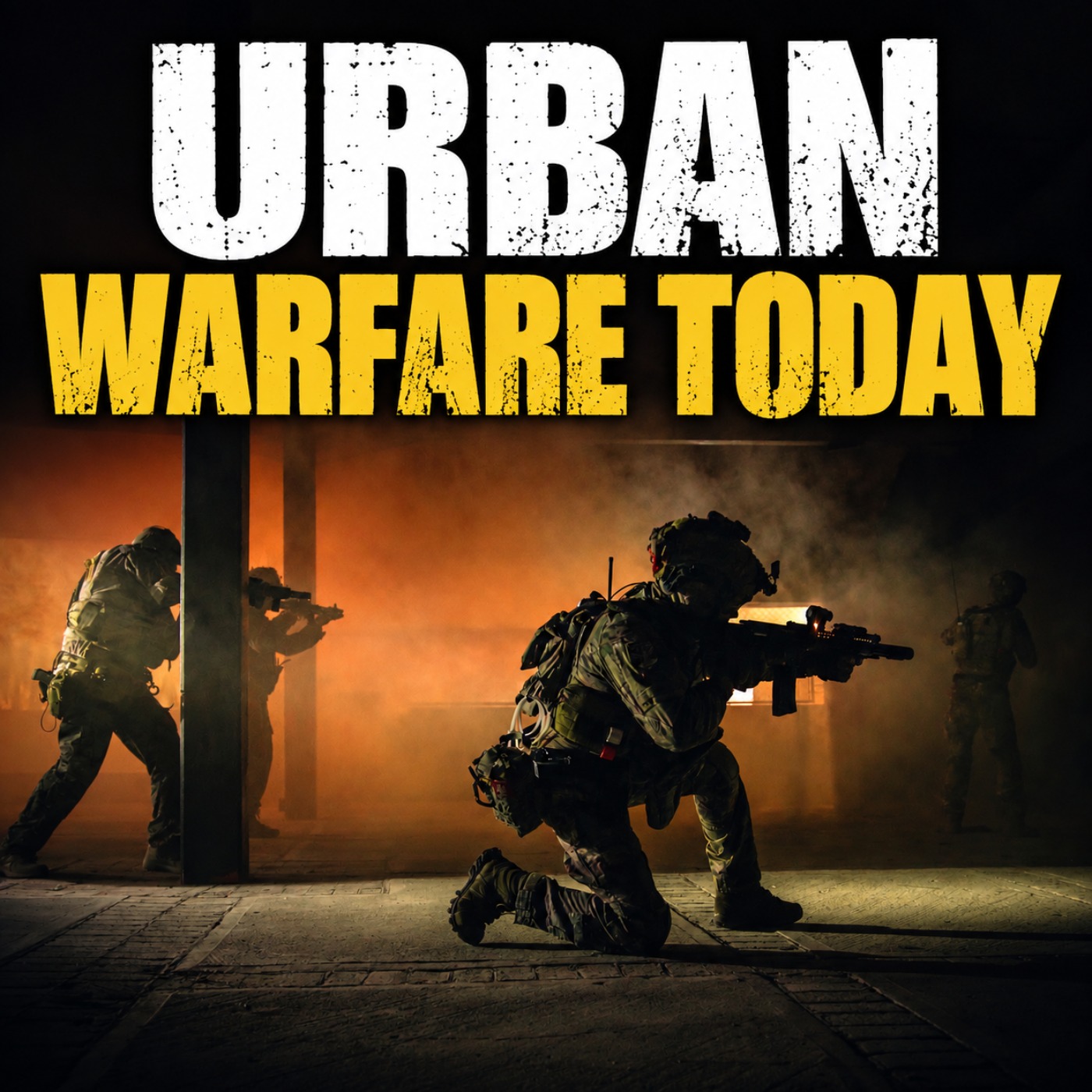
Why Militaries Can't "Bypass and Avoid" Urban Warfare?
The Unconventional Soldier · 1h47m · Oct 14
Stuart Lyle — Urban Operations Lead, DSTL (UK Ministry of Defence)
ModernTactics & BattlesStrategy & Grand Strategy
Stuart Lyle from DSTL — the UK MOD's Defence Science and Technology Laboratory — makes the case that modern armies cannot simply avoid cities, drawing on more than 12 years of research into urban operations. He covers adversary doctrine, lessons from recent conflicts (likely including Mariupol and Gaza), and how emerging technology and data analysis are reshaping urban combat planning. The credibility here is real: Lyle works at the operational-scientific interface rather than the pundit level, and the hosts' Army backgrounds keep the questioning grounded in practical soldiering.

Hang On!
The History of WWII Podcast · 27:22 · Oct 15
Ray Harris Jr. — independent historian covering WWII chronologically
World War IITactics & BattlesLeadership & Command
Ray Harris Jr. covers the Japanese October offensive at Guadalcanal — specifically the piecemeal attacks against Chesty Puller's battalion along the Matanikau perimeter, where poor Japanese coordination between units turned a potentially dangerous assault into a series of disjointed charges. In a week stacked with WWII episodes, this one earns its place through dense tactical chaos and Puller's defensive decisions, packed into a tight 27 minutes. Harris's chronological approach means you get the Japanese command confusion and the American reaction side by side.

Hap Arnold and the B
The WW2 Podcast · 43:54 · Oct 15
Angus Wallace — independent military historian
World War IIAir WarfareLeadership & Command
Angus Wallace traces Hap Arnold's career and his central role in developing the B-29 Superfortress — from the industrial and technological mobilisation required to build the most advanced bomber of the war, through to Arnold's bureaucratic battles to keep the strategic bombing programme under his control. The episode gets at something often overlooked: the B-29 was as much a programme-management achievement as an engineering one, and Arnold's relentless drive (at the cost of his own health) was the engine behind it. Well-paced for 44 minutes.
🟡 Selections

Caratacus: King of the Britons
The Ancients · 1h06m · Oct 11
Dr Miles Russell — Bournemouth University; Dr Tristan Hughes — host, The Ancients
AncientInsurgency & GuerrillaColonial & Imperial
Tristan Hughes and Dr Miles Russell reconstruct Caratacus's seven-year guerrilla campaign against Rome in Britain — his tactical retreats into Wales, the betrayal that ended his resistance, and his famous speech before Claudius. Russell brings proper archaeological grounding to what's often treated as semi-legend.

Ukraine’s Nord Stream Attack: Underwater Sabotage and Its Fallout
SpyCast · 51:23 · Oct 13
Dr Andrew Hammond — historian, International Spy Museum
ModernIntelligence & Espionage
SpyCast covers the Nord Stream pipeline sabotage and the upcoming trial in Hamburg of former Ukrainian special forces officer Serhii K., pegged to the trial's October 14 opening. Good on the forensic investigation trail and the intelligence/covert-operations dimension of the attack.

Second Marne - The Case of Sgt Darnand
Battles of the First World War · 27:00 · Oct 14
Mike Cunha — independent military history podcaster
World War IIntelligence & EspionageTactics & Battles
Mike Cunha follows Sergeant Joseph Darnand from his celebrated trench raid on July 14, 1918 — which produced critical intelligence before Second Marne — through to his wartime collaboration with Vichy and execution as a traitor in 1945. A well-constructed character study that doubles as a window into French tactical intelligence-gathering on the Western Front.

Stratagems
Ancient Warfare Podcast · 46:06 · Oct 09
Murray Dahm & panel — Ancient Warfare Magazine
AncientTactics & Battles
The Ancient Warfare Magazine panel share their favourite stratagems from the classical world — deceptions, feints, and battlefield tricks from Greek and Roman commanders. Conversational and unstructured, but the panel's depth of reading surfaces lesser-known examples alongside the familiar Hannibal and Themistocles set pieces.
📚 Reading List
The Nord Stream Conspiracy — Bojan PancevskiThe Wall Street Journal's chief European political correspondent pieces together the underwater sabotage of the Nord Stream pipelines — the very story at the centre of this week's SpyCast interview with the author himself.
📖 Amazon Superfortress — Curtis E. LeMayLeMay's own account of commanding the B-29 campaign pairs well with the WW2 Podcast's examination of Hap Arnold's enormous gamble on the Superfortress programme.
📖 Amazon The Fall of the Philippines — Louis MortonThe US Army's official history of the 1941–42 Philippine campaign — from Bataan to Corregidor — remains the essential operational account and the natural companion to this week's episode on Wainwright's surrender.
📖 Amazon Kiev 1941 — David StahelStahel digs into the operational and logistical reality behind the Kiev encirclement — the exact German decision-making, fuel shortages, and command disputes that Holland and Murray are unpacking in their new Road to Kiev series.
📖 Amazon Guadalcanal — Richard B. FrankFrank's detailed operational history of the Guadalcanal campaign — including the desperate ground fighting around Henderson Field that Chesty Puller's men endured — is the standard work on the battle covered in this week's episode.
📖 Amazon 🗓 This Week in Military History
Oct 16, 1813 — The Battle of Leipzig began, the largest battle of the Napoleonic Wars.
Oct 17, 1777 — British General Burgoyne surrendered at Saratoga, a turning point in the American Revolution.
Oct 19, 1781 — British forces under Cornwallis surrendered at Yorktown, effectively ending the Revolutionary War.
Oct 20, 1944 — U.S. forces landed on Leyte, beginning the liberation of the Philippines.
