Market Garden dominates the week, and the pairing is unusually good: WW2 LIVE's Hell's Highway episode covers the 101st's corridor fights while Holland and Murray handle the Nijmegen sapper story on We Have Ways. Together, they deliver the sharpest treatment of the lower-zone fighting we've heard in years — making WW2 LIVE's entry this week's standout.
🎯 This Week's Pick
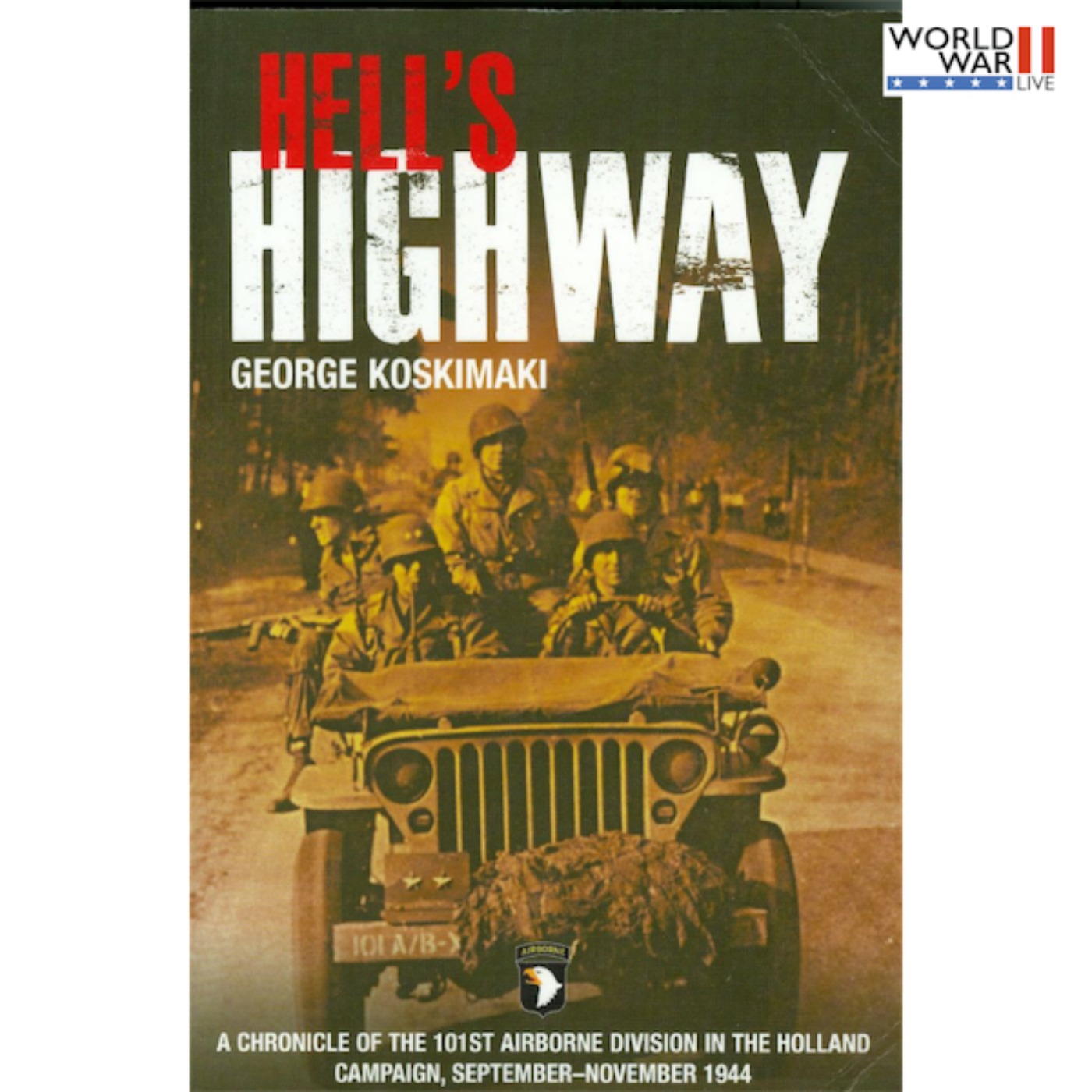
Hell’s Highway: The Forgotten Battles of Operation Market Garden | George Koskimaki
World War 2 LIVE · 1h04m · Nov 06
Mark Fastoso & Kevin Hymel — WW2Live hosts; McManus's research team
World War IITactics & BattlesLogistics & Supply
Mark Fastoso and Kevin Hymel zoom in on the 101st Airborne's fight to keep Hell's Highway open during Market Garden — the unglamorous but operationally critical battles south of Nijmegen that determined whether XXX Corps' supply line survived. The episode gets into the specific engagements: Jagdpanthers, German counterattacks aimed at cutting the single road, and why the corridor was always the weakest link in the plan. This is the part of Market Garden that A Bridge Too Far glosses over, and together with We Have Ways' Nijmegen sapper story it forms the strongest sub-Arnhem coverage in recent memory. McManus's team gives these corridor fights the attention they deserve.
📜 Read the source: Hell's Highway: The Forgotten Battles of Operation Market Garden by George Koskimaki — Published by Presidio Press; also available through standard book retailers and academic libraries
🔴 Essential
The Battle of the Santa Cruz Islands
The History of WWII Podcast · 28:08 · Nov 06
Ray Harris Jr. — independent historian covering WWII chronologically
World War IINavalTactics & Battles
Ray Harris Jr. covers the October 1942 carrier battle off Santa Cruz — Kinkaid's handling of Hornet and Enterprise against the Japanese fleet, set against the backdrop of Henderson Field and the Guadalcanal campaign. Harris's chronological approach means the ground and air context is already established, so this episode can focus tightly on the naval engagement itself. A concise 28 minutes that doesn't waste time — good operational detail on a battle that often gets overshadowed by Midway and the later Naval Battle of Guadalcanal.
🎙 Veterans' accounts: Library of Congress Veterans History Project holds 100+ interviews with WWII naval veterans and servicemen, including participants in Pacific naval operations — searchable at loc.gov/vets
The Schnee Eifel Battles, 1944-45
The WW2 Podcast · 40:37 · Nov 01
Angus Wallace — independent military historian
World War IITactics & Battles
Wallace covers the Schnee Eifel in two phases — the initial American advance through the wooded Eifel terrain, then the catastrophic encirclement of two regiments of the green 106th Infantry Division during the Ardennes offensive, one of the largest American mass surrenders in the ETO. The 106th's destruction is one of those episodes that gets mentioned in every Bulge overview but rarely examined in detail. Wallace gives it proper treatment, including the terrain that made it a trap and the return fighting in early 1945.
Bridging Operation Market Garden: Keeping Up With The Joneses (Part 2)
We Have Ways of Making You Talk · 39:47 · Nov 03
James Holland & Al Murray
World War IITactics & Battles
Holland and Murray follow the Royal Engineers at Nijmegen — the assault boat crossing of the Waal with the 82nd Airborne, Lieutenant Tony Jones riding onto the road bridge with the Grenadier Guards, and the infuriating delay in pushing XXX Corps beyond the bridge once it was taken. The sapper angle is a genuine contribution; this isn't another retread of the Arnhem drama but a properly sourced account of the engineers who made the crossing possible, filling out the picture of Market Garden's real decisive ground south of the Rhine. Pairs naturally with the WW2Live Hell's Highway episode this week for near-complete corridor coverage.
🏛 Where to see it: The Airborne Museum Arnhem holds original documents, photographs, and artefacts relating to Operation Market Garden including the Waal crossing and Nijmegen bridge operations.
🟡 Selections
Sails at Sunset
Age of Napoleon · 1h01m · Oct 31
Everett Rummage — independent historian specialising in the Napoleonic era
NapoleonicNavalStrategy & Grand Strategy
Rummage covers the twilight of Napoleonic naval warfare by 1812 — how the Royal Navy's dominance became effectively unassailable and what dwindling options remained for France and its allies. Good on the structural reasons naval competition faded rather than just recounting battles.
The Story of Bazooka Charlie
Lions Led By Donkeys · 1h11m · Nov 01
Peter Crean & Luke Robinson
World War IIAir WarfareWeapons & Technology
The gloriously absurd story of Major Charles Carpenter, the artillery spotter who strapped bazooka tubes to his Piper Cub and went tank-hunting in the ETO. Lions Led By Donkeys at its best when it's having fun with a genuinely weird story — and Carpenter was the real deal, credited with destroying or disabling multiple German armoured vehicles from a fabric-and-tube aircraft.
Interview w/ Adam Makos: Tidal Wave
The History of WWII Podcast · 1h01m · Nov 04
Adam Makos — author of Tidal Wave; interviewed by Ray Harris Jr.
World War IIAir WarfareMemoir & Personal Account
Adam Makos discusses Operation Tidal Wave — the August 1943 low-level B-24 raid on Ploesti — and the survival stories of downed American aircrews in Axis Romania. Interview format with a storytelling-first author, so expect narrative colour over tactical granularity.
Revolution in the Soviet Empire: The Hungarian Uprising (Part 1)
The Rest Is History · 1h27m · Nov 02
Tom Holland & Dominic Sandbrook
Cold WarCivil War & Rebellion
The political build-up to the 1956 Hungarian Revolution — Stalinism's legacy, the reform movement, and the initial outbreak. The military action comes in Part 2; this is mostly political context.
🏛 Where to see it: The House of Terror Museum in Budapest preserves the headquarters of the ÁVH secret police and documents the Soviet suppression of the 1956 Hungarian Revolution, including period photographs, prison cells, and torture equipment.
⚖ The debate: Was the Hungarian uprising primarily a nationalist revolt against Soviet domination, or fundamentally a working-class and reform-communist movement against Stalinist authoritarianism? Historians emphasising national liberation (e.g., János Rainer, István Deák) stress anti-Soviet and anti-colonial dimensions; those foregrounding the reform-communist character (e.g., Mark Pittaway) argue workers and intellectuals sought to reclaim socialism from its Stalinist distortion, not abandon it entirely.
📅 Anniversary week — the Hungarian Revolution began 23 October 1956; the Soviet suppression followed on 4 November.
When did 'hero' warfare end?
Ancient Warfare Podcast · 11:26 · Nov 06
Murray Dahm & Myke Cole — Ancient Warfare Magazine
AncientTactics & Battles
A listener question about the transition from Homeric individual combat to organised Classical tactics — the Iliad as a lens, with discussion of how later Greeks mythologised or misunderstood earlier warfare. Brief at 11 minutes; interesting question but only lightly treated.
📚 Reading List
Tidal Wave — Adam Makos
Adam Makos tells the story of the disastrous low-level raid on Ploesti and the survival odyssey that followed for downed American airmen in Axis-controlled Romania. He joined the podcast to discuss this one directly.
Via: Interview w/ Adam Makos: Tidal Wave, The History of WWII Podcast
📖 AmazonJavelins in the Half-Light: The Schnee Eifel Battles, 1944-45 — Craig S. Chapman
A detailed account of the three battles fought around the Schnee Eifel — from the initial American advance through the woods, to the surprise encirclement of the 106th Division during the Ardennes offensive, and the final push back in 1945. Chapman joined the podcast to walk through why this overlooked sector mattered so much.
Via: The Schnee Eifel Battles, 45, The WW2 Podcast
📖 AmazonBazooka Charlie — James P. Busha
The wonderfully absurd true story of an artillery-spotter pilot who decided to strap bazookas to his Piper Cub and go tank-hunting across France with Patton's army. The primary source for the Lions Led By Donkeys episode.
Via: The Story of Bazooka Charlie, Lions Led By Donkeys
📖 AmazonHell's Highway — George Koskimaki
Koskimaki, himself a 101st Airborne veteran, assembled first-hand accounts of the desperate fighting to keep the single supply corridor open during Market Garden — the battles that tend to get overshadowed by the drama at Arnhem. A perfect companion to the WW2Live episode on the same subject.
Via: Hell's Highway: The Forgotten Battles of Operation Market Garden | George Koskimaki, World War 2 LIVE
📖 Amazon
If a friend would find this useful, send them the link. That’s the entire growth strategy.